The two sides of Brazilian Jiu-Jitsu explained — how gi and no-gi grappling differ in grip, pace, and technique, and why training both at Billingshurst BJJ makes you a more complete grappler.
Two Sides of the Same Art
Brazilian Jiu-Jitsu is practised in two main forms: gi and no-gi. Both are BJJ, both share the same core principles, and both are taught at Billingshurst BJJ — but they feel noticeably different on the mats. Understanding the difference helps you decide where to start and, over time, makes you a more complete grappler.
The Gi: Tradition, Grip, and Control
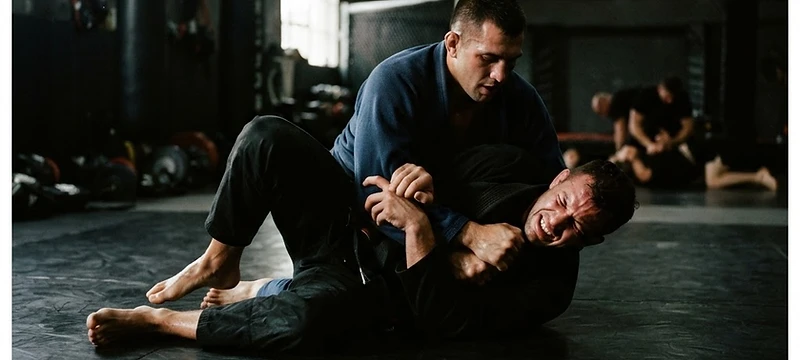
The gi is the traditional uniform — a heavy cotton jacket, trousers, and a coloured belt. It's what most people picture when they think of BJJ. The gi changes the art in two big ways.
First, you can grip the fabric. That means gi grappling is rich in collar chokes, sleeve controls, and lapel guards. Grip fighting becomes a skill in itself — breaking a strong grip and establishing your own is often the difference between passing and getting swept.
Second, the gi slows the game down. The friction and grips make it harder to slip out of positions, so matches can become more methodical and technical. If you enjoy a slower, more strategic game with lots of control and submission setups from grips, the gi is deeply rewarding.
No-Gi: Speed, Scrambles, and Modern Submissions
No-gi is practised in a rash guard and shorts, with no fabric to grab. Without grips, the game speeds up considerably. Escapes are easier, scrambles are more frequent, and the pace is closer to what you see in MMA grappling.
No-gi emphasises underhooks, overhooks, and body locks rather than sleeve and collar grips. Leg entanglements — heel hooks, kneebars, and saddle positions — play a much bigger role, and the modern submission game has evolved largely through no-gi. If you enjoy a faster, more athletic, more dynamic style of grappling, no-gi might be your preference.
Which Should You Start With?
Honestly, either. The fundamentals — positional control, escapes, basic submissions — are the same in both. Most beginners find the gi slightly easier to learn in because the grips give you something to hold onto, which slows the game and gives you time to think. But plenty of people start in no-gi and love it.
Our advice is simple: try both in your first few weeks. You'll naturally gravitate towards one, and many of our members train both long-term because each fills in the gaps the other leaves.
Why Training Both Makes You Better
Gi and no-gi develop different skills that complement each other. The gi builds your grip strength, your patience, and your understanding of control and submission setups. No-gi builds your speed, your scrambling, and your ability to apply technique without the help of fabric grips.
Grapplers who train both tend to be more adaptable. A gi player who tries no-gi learns to move faster and rely less on grips; a no-gi player who puts on the gi learns patience, pressure, and a whole new world of submissions. Together, they make you a more complete, more dangerous grappler — which is exactly why we teach both at Billingshurst BJJ.
What to Wear
For gi classes, you'll need a gi (we can advise on sizing and brand once you decide to continue). For no-gi, a rash guard and grappling shorts are standard. For your first few sessions, comfortable workout clothes are fine for either — you don't need to invest before you've tried it.
Frequently Asked Questions
Is gi or no-gi better for self-defence? Both work. No-gi is closer to what a real altercation feels like (no clothing to grip), but the gi builds control and patience that transfer to any situation.
Can I compete in both? Yes. Most BJJ competitions offer gi and no-gi divisions, and many of our members compete in both.
Do I need a gi for my first class? No. Wear comfortable clothes and we'll lend you what you need to get started.
Which is harder? They're hard in different ways. Gi is more technical and grip-intensive; no-gi is faster and more athletic. Both are beginner-friendly with good coaching.
Try both gi and no-gi at Billingshurst BJJ and become a more complete grappler. Book your free trial today.
Ready to start training?
Book your free BJJ or kickboxing trial class at Billingshurst BJJ today.
Book a Free Trial